EU regulatory guide
Private label: whose compliance is it?
White label and private label brands often assume the factory's paperwork travels with the product. It does not. The moment your name goes on the jar, most of the compliance burden becomes yours, and the difference between reselling and rebranding decides everything.
Reviewed by Cassandra Maddocks, chemist & biochemist · last reviewed 27 July 2026
Do I need my own compliance if I private-label in the EU?
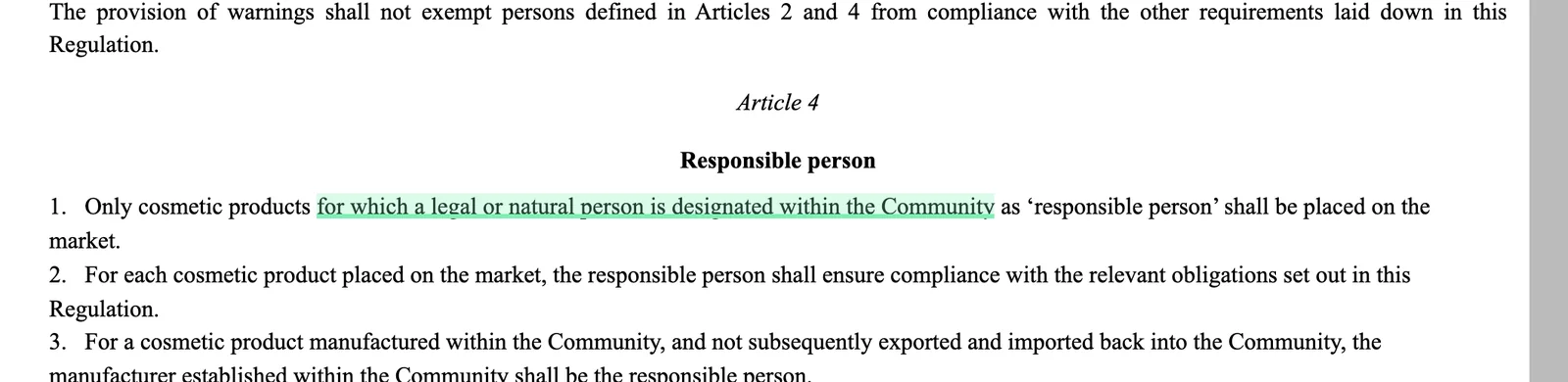
Selling a manufacturer's product unchanged under their brand makes you a distributor with lighter duties. Putting your brand on it makes it your product in the regulation's eyes; the roles are drawn in Regulation (EC) No 1223/2009.
Can I use the manufacturer's CPSR and PIF?
The practical path: ask the manufacturer for the exact formula with percentages, raw material safety data sheets, GMP evidence and existing test reports, the same list as the CPSR inputs. A supplier who will not share them with your assessor under confidentiality is telling you something.
Who is the Responsible Person for a white-label product?
One default to know: for a product manufactured inside the EU, the regulation makes the EU manufacturer the Responsible Person unless a written mandate appoints someone else, so without paperwork your factory holds the role whether either of you noticed or not. An independent appointment keeps your notifications and file portable when you change suppliers, which private label brands do more often than most. The mechanics are in the EU RP guide and the switching guide.
Does the same logic apply on marketplaces and in other markets?
The reseller side of the question, what you can demand from a wholesaler when you are not rebranding, is covered in the marketplace guide. For your own range, request a quote with your supplier situation in the notes.
Primary sources cited in this guide. Regulatory status last verified 27 July 2026.
Related reading