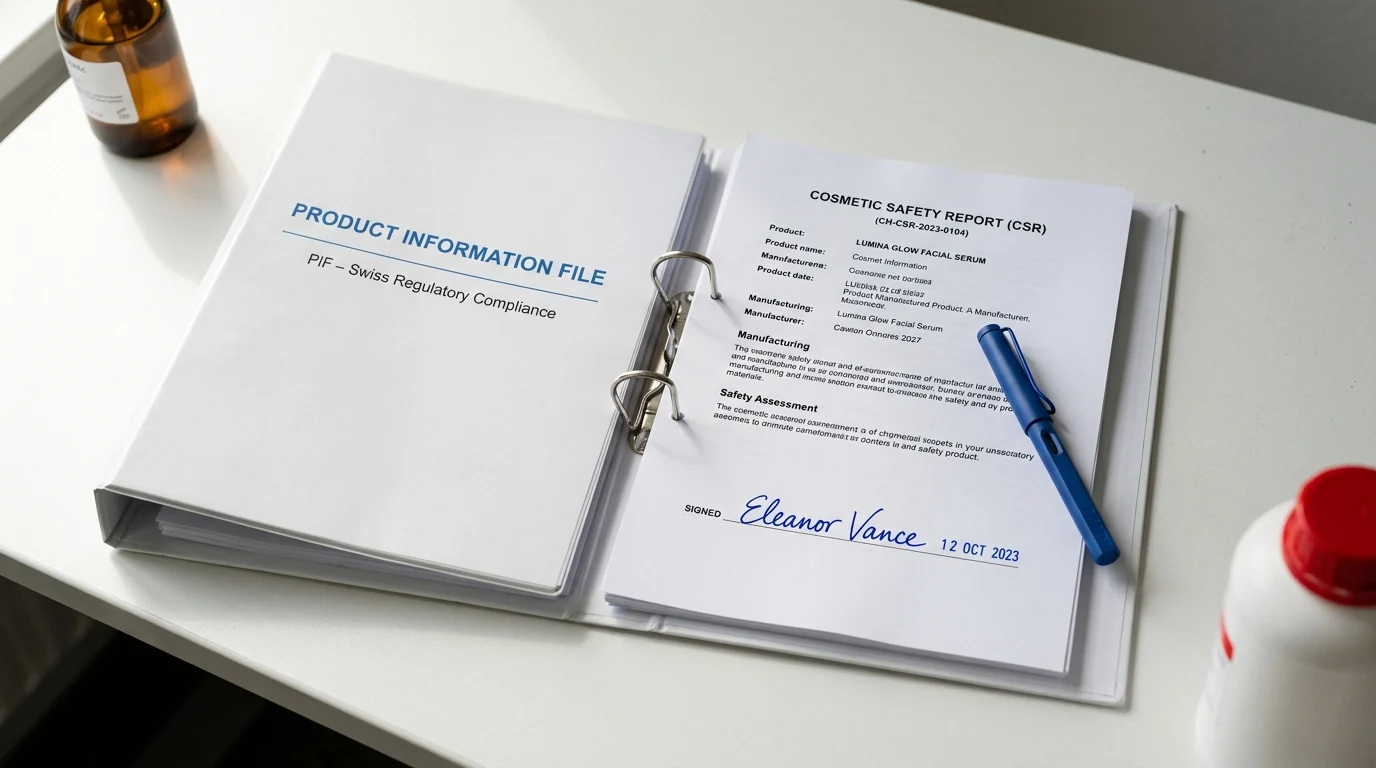
Recurring mandate
Compliance Care subscription.
Ongoing regulatory monitoring, ingredient and claims alerts, and renewals handled across all your markets.
What it is for
Compliance is not a one-time task.
Getting your first dossier signed and your first notification filed is the start of the obligation, not the end of it. In every market CIG covers, a Responsible Person or agent carries a continuing legal duty for as long as the product is on the shelf. Rules change, ingredient restrictions are added, and registrations have to be renewed on a schedule. A product that was compliant at launch can drift out of compliance while nothing on your side has changed.
Compliance Care is the ongoing layer that keeps your files current between launches. It watches the four regimes for changes that touch your specific formulas and labels, tells you what a change means for your products, and manages the renewal dates that keep your notifications and registrations valid. The same qualified people who prepare your dossiers stay responsible for them, so there is no handover to a call centre after launch.
Why the obligation continues
The duty stays live while the product sells.
Each market treats the responsible role as a standing duty, not a filing you complete once.
Reviewed by Cassandra Maddocks, chemist & biochemist · last reviewed 26 July 2026
Compliance Care is CIG's monitoring service. It keeps registrations, listings and notifications current, tracks regulatory changes across the EU, UK, Switzerland and the US, and updates your files when formulas or labels change, so renewals and rule changes never catch your products exposed.
Legal basis: FDA: MoCRA, EUR-Lex: Regulation (EC) 1223/2009, GOV.UK guidance.
In the EU, the Responsible Person named under Regulation (EC) No 1223/2009 holds the Product Information File, keeps the safety report current, manages CPNP notifications, and stays the official contact for authorities including recalls. That accountability runs for the whole time the product is on the market. Under Article 11, the PIF has to be kept for 10 years after the last batch was placed on the market, so record-keeping outlives the product itself.
In the UK, the UK Responsible Person keeps the PIF for 10 years after the last batch, holds the SCPN notification filed with the Office for Product Safety and Standards (OPSS), and reports serious undesirable effects. In Switzerland there is no notification portal at all: control happens after products reach the market, through cantonal laboratory inspections, so you have to hold a self-monitoring dossier that is current and available on request across the 26 cantons. Under MoCRA in the US, facilities renew their registration every two years and the Responsible Person keeps product listings, safety substantiation, and adverse-event records live the whole time.
Ingredient rules move under all four regimes. When a substance is newly restricted or banned, an existing formula can fall out of line without any change on your side. Compliance Care is the layer that catches those shifts against your actual formulas rather than a general newsletter, and turns them into a plain instruction: what changed, which of your products it touches, and what to do next.
What is included
One subscription, all four markets.
Monitoring, alerts and renewal management that keep every dossier current as your range grows.
Regulatory monitoring across the EU, UK, Switzerland and the US. We watch each regime for changes that touch your specific products, so a shift in one market does not go unnoticed while you focus on another.
Ingredient-restriction alerts. When a substance in one of your formulas is newly restricted or banned, you hear about it against your own INCI list, not a general bulletin. Recent EU examples include BMHCA (sold as Lilial), restricted as a reprotoxic substance, and further CMR restrictions applied through the Omnibus route.
Label and claims updates when the rules shift. Unsubstantiated claims are a recurring finding under EU Article 19 labelling rules, and Swiss labels have their own language requirements, so we flag wording that needs to change before an inspector does.
Renewal management, including MoCRA facility-registration renewals every two years and any periodic obligations in the other markets. We hold the dates and act before them, so nothing lapses.
A maintained Product Information File kept current as your range grows and kept for the full 10-year retention period after your last batch.
Notification updates. When a formula, label, or pack image changes, the CPNP and SCPN entries have to be updated to match. We keep the notifications aligned with what you actually sell.
Every change we act on is recorded. You keep a decision log showing what changed, when we acted, and who confirmed it, under the same governance as the rest of your dossiers. No notification is filed and no dossier is altered without a person confirming it first. Every safety report stays reviewed and signed by a qualified assessor.
Who does the work
The same qualified people who signed your dossiers.
Compliance Care is run by the regulatory team that prepares your files, not a separate support desk. When a change touches your safety report, the reassessment and any re-signature come from a qualified safety assessor holding a university diploma in pharmacy, toxicology, medicine, or a discipline recognised by an EU Member State. That is the same qualification required to sign the Part B safety assessment of a CPSR in the first place, so an updated report carries the same standing as the original.
Regulatory changes, notification updates, and renewal filings are handled by the people who hold your mandate. In markets where CIG acts as your Responsible Person or agent, that role stays with us for as long as you subscribe, and the professional-indemnity insurance behind the role stays in place.
What we need from you
What keeps the monitoring accurate.
The alerts are only as good as the product data behind them, so a short set of inputs matters.
Your current formulas. A full INCI list with concentrations for each product, so ingredient alerts run against what is actually in the pack.
Your live labels and pack artwork. Front and back images for each market, so claims and warnings are checked against the wording on the shelf.
Your existing dossiers. The PIF, the signed safety report (CPSR), and any notification references (CPNP or SCPN) and MoCRA listing details, if we did not prepare them.
Notice of any change. A reformulation, a new supplier, a new pack size, or a new claim. Tell us and we update the file and the notifications to match.
Your market list. Which of the EU, UK, Switzerland and the US each product is sold in, since the obligations differ by market.
If CIG already prepared your dossiers, most of this is on file and onboarding is a short review rather than a fresh handover. If you are moving from another provider, we can take over existing CPNP and SCPN accounts and continue managing future updates, so there is no need to rebuild your notifications from scratch.
Timelines
When things happen.
Monitoring is continuous while you subscribe. When a rule changes, we assess what it means for your products and send you a plain summary, so you are not left reading the regulation yourself. When a change requires a filing, the timing depends on the market. A CPNP notification update typically takes a few business days once the revised documentation is ready. An SCPN update goes to OPSS on the same basis. A safety reassessment takes longer where new testing is needed, since stability and challenge testing run on their own laboratory schedules and cannot be shortened.
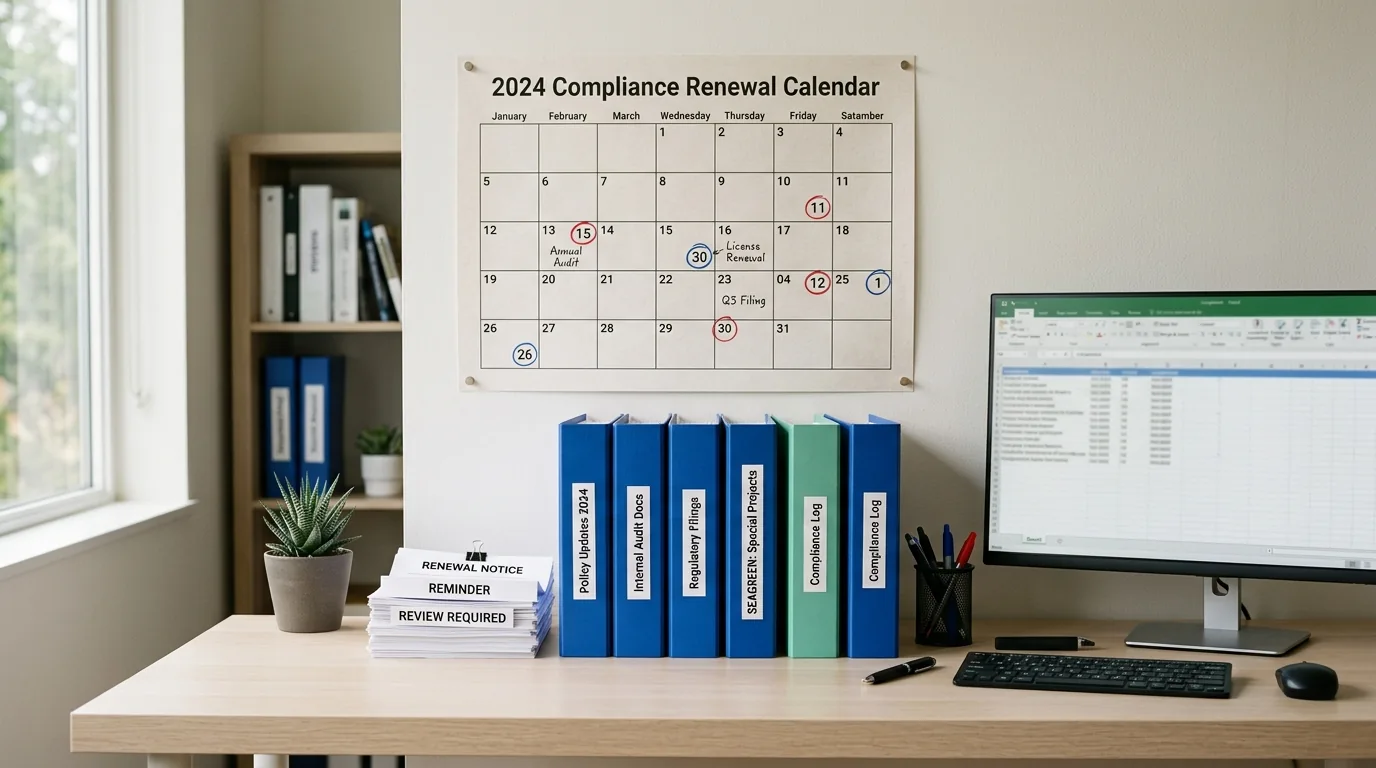
Renewal dates are fixed and we work back from them. MoCRA facilities renew every two years, and each facility's own renewal falls on the anniversary of its initial registration rather than a single shared date. Where registration details have changed, FDA must be notified within 60 days of the change. We hold these dates for you and act before them, not on the day they fall.
Edge cases
Where monitoring needs extra care.
A few product types and changes carry obligations beyond the standard file.
Nanomaterials
A product containing a nanomaterial needs a separate notification in the EU under Article 16 of Reg. 1223/2009, on top of the standard CPNP notification. If a reformulation introduces a nanomaterial, or a supplier changes an ingredient to a nano grade, the extra notification has to be made and kept current. We flag this as part of monitoring rather than leaving it to be discovered at inspection.
Baby, child, and higher-scope products
Products for babies and children, and certain categories such as hair dyes and products for the eye area, carry a higher safety burden and are assessed at a higher scope. When a rule change touches these categories, the reassessment work is larger, and we treat them as such rather than applying a general update.
Restricted and banned ingredients
When a substance moves onto a restriction or ban, a formula that was compliant becomes non-compliant with no change on your side. Common causes of EU recalls include use of a prohibited or restricted ingredient and an incomplete PIF, so ingredient monitoring against your own formulas is where most drift is caught early.
US drug-claim reclassification
A claim such as treating eczema or repairing the skin barrier can reclassify a product as an over-the-counter drug in the US, moving it out of MoCRA and into stricter drug rules and past FDA warning letters. When we review a new claim, we flag wording that risks this before it reaches the label.
How it fits your other services
The layer over your mandates.
Compliance Care sits on top of the market mandates and project work, keeping each one current.
Each market is a separate legal regime with its own file. The EU needs an EU Responsible Person, a PIF, a signed CPSR, and a CPNP notification. Great Britain needs a UK Responsible Person and an SCPN notification through OPSS, and neither portal talks to the other, so an EU notification does nothing for the UK. Northern Ireland follows the EU route under the Windsor Framework, not the Great Britain route. Switzerland needs a responsible person or agent with a Swiss-territory address, since an EU address on the pack cannot carry the legal obligation, and it relies on post-market cantonal inspection rather than a portal. The US needs MoCRA facility registration, annual product listing, and a US Agent for foreign facilities.
Compliance Care keeps each of those current at once. Instead of tracking four sets of dates and four sets of rule changes yourself, or paying four vendors to do it separately, you hold one subscription that covers every market you sell in. As you add products or add a market, the subscription scales to cover them.
Who it is for
Brands that need compliance kept current.
Once your products are launched and your mandates are in place, the work shifts to keeping everything current as rules and ranges change. Compliance Care suits brands selling across several markets that want monitoring, alerts and renewals handled in one subscription, under the same governance as the rest of their dossiers. It fits indie and direct-to-consumer brands with a growing range, and portfolio accounts such as distributors and private-label manufacturers carrying many products at once.
Pricing
A subscription, scaled to your portfolio.
The price scales with the size of your portfolio and the number of markets you cover.
See full pricing →Where this service fits
Ongoing compliance in your four-market path.
FAQ
Common questions.
Related
Pairs well with.
US Agent and MoCRA
The mandate behind your tracked MoCRA renewals.
View service →EU Responsible Person
The mandate kept current alongside your subscription.
View service →Label and claims review
Catch label and claims changes as the rules shift.
View service →Services overview
See how recurring mandates and project services fit together.
All services →In practice
Compliance, in the real world.