EU regulatory guide
Cruelty-free: the claim and the law beneath it.
Few phrases sell cosmetics harder than cruelty-free, and few are as widely misunderstood. In the EU the substance of it is not a marketing choice at all: animal testing for cosmetics has been banned by law for over a decade. Here is what Article 18 actually says, and what the bunny logos add on top.
Reviewed by Cassandra Maddocks, chemist & biochemist · last reviewed 27 July 2026
Is animal testing banned in the EU?
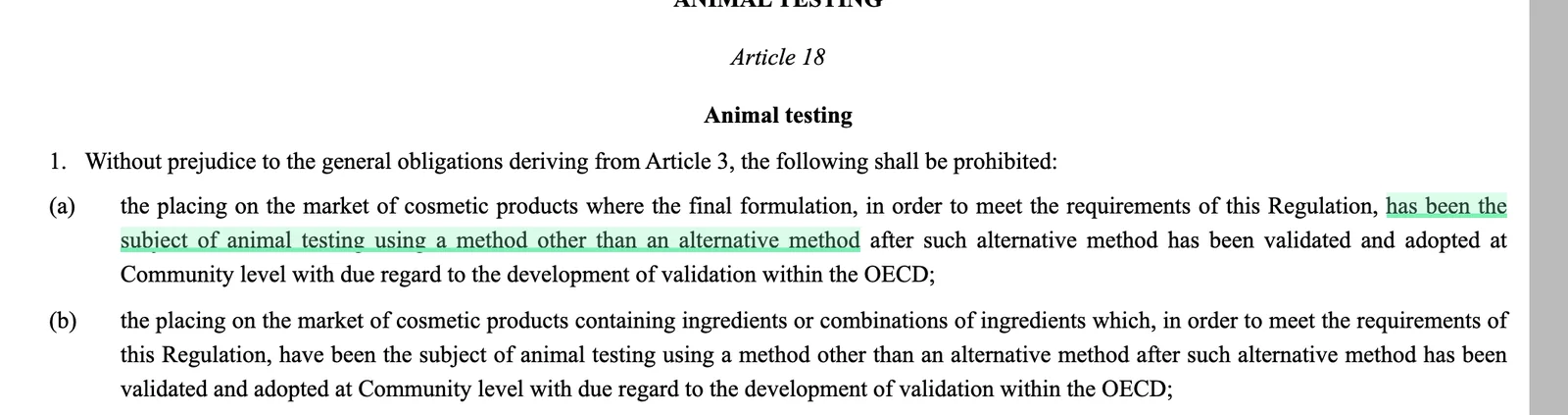
The second ban is the one with teeth: it applies regardless of where in the world the testing happened. Safety is demonstrated with validated alternative methods instead, which is what the CPSR's test inputs are built from.
Does the same ban apply in the UK and elsewhere?
This is why blanket global claims deserve care: the EU bans are absolute within their scope, but a claim on an EU shelf speaks for the brand's conduct everywhere. The claims criteria in our claims guide judge that impression, not just the legal minimum.
So is a cruelty-free label even meaningful in the EU?
Under the claims rules, a cruelty-free statement must still be true in the impression it creates for your brand as a whole. Our claims review checks whether your wording matches what you can actually evidence.
Can I test on animals for other product laws and still sell cosmetics?
For brands the practical reading is this: the tension sits at ingredient-registration level, between suppliers and ECHA, not at the level of your finished product, and it never requires you to commission animal tests. Formulate with established ingredients and the question stays upstream of you. Where it does arise, tell us the specifics through the contact page before choosing wording.
Primary sources cited in this guide. Regulatory status last verified 27 July 2026.
Related reading