EU regulatory guide
CPSR cost and timeline, honestly.
What a Cosmetic Product Safety Report actually costs, what drives the price up, and why the calendar is set by the lab rather than the assessor.

Reviewed by Cassandra Maddocks, chemist & biochemist · last reviewed 26 July 2026
How much does a CPSR cost?
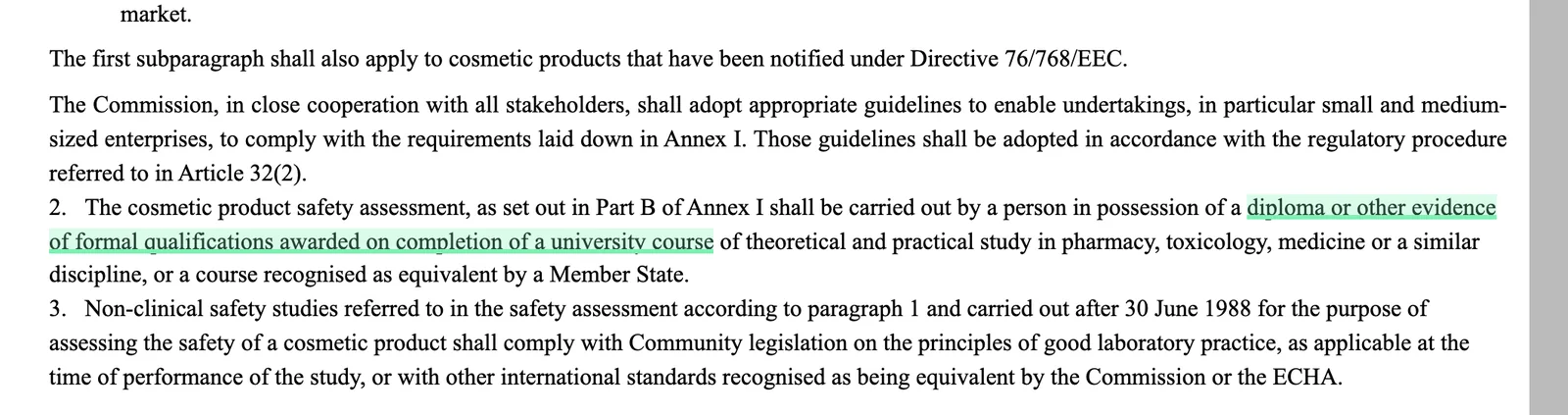
The market ranges much wider than that, in both directions. Very cheap reports usually mean an unqualified signature or a template that will not survive an authority's questions; very expensive ones often price the consultancy around the report rather than the report. What the price should always include is a named assessor qualified in pharmacy, toxicology or medicine, the requirement set by Regulation (EC) No 1223/2009. Our current prices are on the pricing page.
What makes a CPSR cost more?
Shades and scents on a shared base formula work in your favour: they can often be assessed together as a framework, so a ten-shade range does not cost ten full assessments. We flag the edge cases before they become invoices. That judgement call is part of the CPSR service.
How long does a CPSR take?
This is the single most misunderstood timeline in cosmetics compliance. The report is not the slow part; the testing behind it is. Which inputs matter and why is covered in our CPSR required inputs guide.
Can I speed it up?
A launch plan that starts compliance the month before shipping will slip; one that starts when the formula settles usually does not. For a first EU product, work backwards from launch: testing first, assessment once data lands, then PIF assembly and the CPNP notification in the final stretch.
Does the CPSR expire?
Budget for the assessment as a living document over the product's life, not a launch receipt. Keeping it current alongside the file and notifications is the recurring work of Compliance Care.
Is one CPSR enough for the EU, UK and Switzerland?
That reuse is the strongest argument for doing the EU report properly the first time. The details per market are in our EU, UK and Swiss guides, and the whole launch budget across markets is in our cost guide, and how the report relates to the dossier and the filing is in our CPSR vs PIF vs notification comparison.
Primary sources cited in this guide. Regulatory status last verified 26 July 2026.
Put this into practice